
AI agents are redefining automation and intelligent computing, offering advanced capabilities that are reshaping industries and daily life. Delve into their transformative potential.
Understanding AI Agents: Core Functionality and Applications

AI agents are at the heart of modern technological advances. Their capability to operate autonomously while processing large volumes of data is transformative. At their core, AI agents are designed to perceive environments, interpret data, learn from it, and make decisions with minimal human intervention.
These autonomous systems can be best appreciated through their ability to adapt and evolve. Machine learning and deep learning algorithms power AI agents, enabling them to identify patterns and improve over time. Thanks to these capabilities, AI agents can deploy predictive analytics and provide insightful recommendations.
In homes and offices, virtual assistants represent one of the most visible manifestations of AI agents. Through natural language processing, these agents understand spoken commands and interact seamlessly with users. They manage schedules, answer questions, and control smart devices, enhancing productivity and convenience.
Another remarkable application is in autonomous vehicles. AI agents play a critical role here, processing real-time traffic data, identifying obstacles, and making split-second decisions. This advanced functionality is made possible by integrating sensors, cameras, and sophisticated algorithms.
Beyond technical applications, AI agents are revolutionizing customer service. Chatbots, powered by AI, efficiently handle inquiries by providing rapid responses, reducing wait times, and improving user satisfaction. These agents are now capable of understanding context, making interactions more meaningful and human-like.
Healthcare is another field witnessing the impact of AI agents. They assist in diagnostics, analyze medical images, and even predict disease outbreaks. This not only enhances the accuracy of diagnostics but also personalizes patient care, leading to better outcomes.
The entertainment industry has also embraced AI agents. AI video generator tools automate content creation, enabling creators to produce engaging media quickly. This accelerates creativity and diversifies content consumption.
In each of these applications, the ability of AI agents to learn continuously and adapt makes them indispensable. They not only execute tasks but also contribute to strategic decision-making through data-driven insights. As the landscape of intelligent computing evolves, the reliance on AI agents is set to grow even more pervasive, redefining industries and reshaping everyday life.
AI Agents Transforming Business Landscapes

AI agents are redefining business landscapes by seamlessly integrating into processes that drive automation and enhance customer interfaces. Businesses across sectors leverage AI agents to simplify routine tasks, allowing human capital to focus on strategic growth. By undertaking mundane, repetitive tasks, AI agents reduce human error and boost efficiency. Process automation is not limited to executing scripted tasks; it extends to learning and adapting from operational data, driving continuous optimization.
Customer service experiences significant transformation with AI-driven chatbots stepping in as frontline representatives. These chatbots effectively handle numerous customer inquiries, offering instant support around the clock. Their ability to learn from past interactions leads to improved responses over time. Unlike static FAQs or traditional support systems, chatbots can understand context and nuance, providing more accurate assistance. This contributes to customer satisfaction and reduces response times, enhancing brand reputation.
Moreover, AI agents profoundly impact data-driven decision-making in businesses. Market analysis tools powered by AI are employed to sift through massive datasets for actionable insights. These tools help identify trends and forecast future market dynamics with remarkable accuracy. They provide comprehensive perspectives that human analysts might overlook, enhancing strategic planning and decision-making processes.
The benefits are evident – enhanced efficiency and higher profitability. Automation reduces operational costs while improving service quality. AI agents enable businesses to scale efforts without proportionately increasing resources. As illustrated, customer service expenses can decrease by delegating initial interactions to chatbots. Likewise, data-driven insights brought by AI tools can boost revenue by aligning business strategies more closely with consumer needs.
Yet, the real transformative power of AI agents lies in their adaptability. For instance, businesses can fine-tune chatbots based on evolving customer expectations to maintain competitive advantage. Similarly, market analysis tools remain relevant as they continuously learn from new data streams, ensuring their forecasts and insights stay up-to-date.
Incorporating AI into these critical areas not only streamlines operations but also empowers businesses to innovate continuously. Companies adopting AI agents stand poised to harness their full potential, as explored by articles on how to use AI chatbots, fostering a more intelligent and responsive business environment.
Navigating Challenges and Ethical Implications
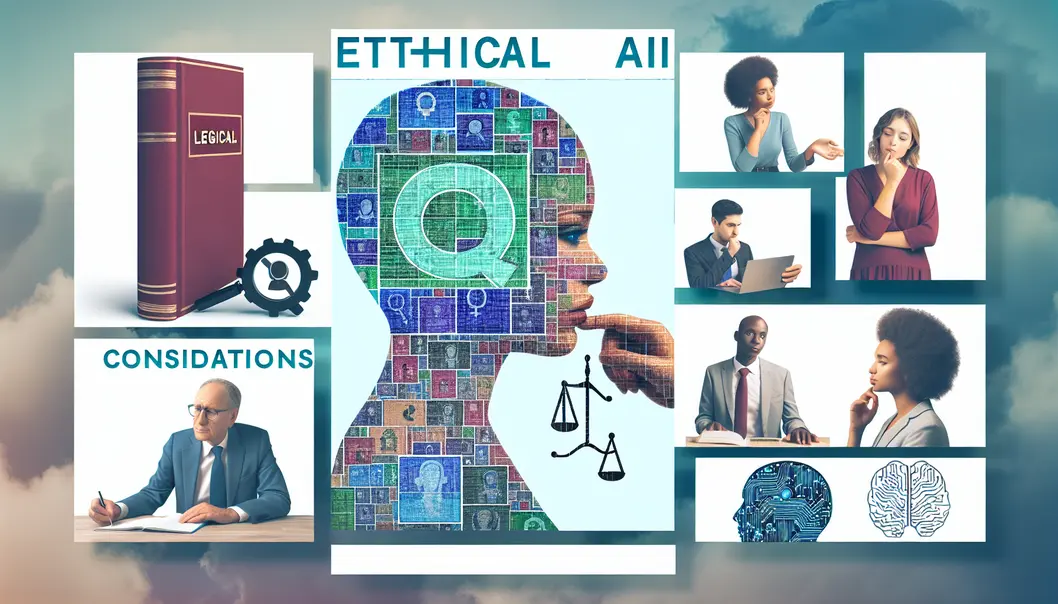
As AI agents increasingly integrate into various sectors, they pose substantial challenges. One major concern is job displacement, potentially exacerbating unemployment. Automation may render certain positions obsolete, especially jobs with repetitive tasks. While new roles could emerge as AI evolves, the transition requires addressing workforce reskilling and economic support mechanisms.
Another significant issue is privacy. AI agents often process personal data, raising concerns about data security and misuse. Companies and developers must prioritize robust data protection measures, ensuring that data collection and analysis align with privacy standards and user consent.
These challenges highlight the necessity for ethical guidelines in AI deployment. Establishing a framework of ethical principles can guide developers in creating responsible AI systems. This includes prioritizing transparency, fairness, and accountability in AI operations. Clear documentation of AI decision-making processes can enhance trust and mitigate biased outcomes.
There is also a growing discourse around regulatory frameworks. Policymakers and stakeholders are deliberating on AI oversight, balancing innovation with safe application. Regulations can standardize ethical practices among developers, ensuring a commitment to public safety and rights protection. However, regulations should not stifle creativity or impede technological progress.
Several initiatives focus on responsible AI usage. Collaborative efforts among tech companies, academic institutions, and governmental bodies aim to craft ethical AI standards. Research on AI biases contributes valuable insights to these discussions. Open dialogue encourages diverse perspectives, fostering comprehensive and inclusive approaches to ethical AI.
For AI’s potential to be fully realized, these challenges and ethical considerations must be addressed systematically. By doing so, society can navigate this technological revolution, ensuring AI agents serve the greater good and foster a future where intelligent computing benefits all.
Linking the ethical considerations of AI with creative applications exemplifies these discussions further. Tools enabling creativity, like AI-driven video generators, reflect both the potential and responsibility inherent in AI. For more on such AI tools, check this AI video generator tool. Ensuring these tools adhere to ethical standards is a microcosm of the broader AI ethics dialogue.
Final words
AI agents promise to redefine technology and society, driving innovation and productivity. Balancing their potential with ethical oversight is crucial for sustainable progress.