
AI agents are reshaping business by automating processes, enhancing decision-making and enriching customer experiences. Their integration represents unprecedented opportunities for growth and efficiency.
Streamlining Operations with AI Agents

AI agents are transforming the way businesses optimize their operational flow by introducing unparalleled levels of automation and efficiency. At the core of this transformation is the ability of AI to handle complex tasks that were traditionally time-consuming and prone to human error. Such tasks include data processing, predictive analytics, and dynamic resource management, all of which contribute to streamlined business operations.
Automation stands out as one of the most prominent ways AI agents enhance business efficiency. In industries such as manufacturing, AI-driven robotic systems handle assembly lines, performing repetitive tasks with precision and speed. These systems not only reduce the reliance on human labor but also minimize errors and improve the consistency of production outputs.
In logistics, AI agents optimize route planning and inventory management, ensuring that resources are used efficiently and delivery times are minimized. By analyzing traffic patterns and delivery schedules, AI systems propose the most efficient paths for transportation, often leading to significant reductions in fuel consumption and delivery delays. In the context of advanced voice synthesis technology, businesses can automate customer service operations, where AI-powered virtual assistants offer 24/7 support, handling routine inquiries and freeing human agents for more complex tasks.
Data processing, another element where AI agents excel, is revolutionized by machine learning algorithms that sift through massive datasets to extract actionable insights. For example, in finance, AI systems analyze market trends and customer behaviors, offering predictive insights that help organizations make informed investment decisions. Similarly, in healthcare, AI tools analyze patient data to identify patterns and predict potential health risks, allowing for proactive management and better allocation of resources.
Efficiency gains from AI agents are especially evident in their ability to learn and adapt over time. By continuously analyzing their performance and outcomes, these agents can refine their processes, leading to ongoing improvements in operational efficiency. This adaptive nature means businesses can stay agile in response to changing market conditions while maintaining optimal performance standards.
Through a combination of automation, advanced data processing, and continuous learning, AI agents are not just tools but integral components of modern business strategies. Their implementation is reshaping operational landscapes, making businesses more responsive, effective, and competitive in increasingly complex environments.
Enhancing Decision-Making through AI Insights

AI agents are increasingly pivotal in business decision-making, offering unprecedented analytical capabilities. By harnessing sophisticated algorithms, these agents process vast datasets to uncover patterns and trends that human analysts might miss. This capacity allows businesses to leverage data for more informed, strategic decisions.
Consider the example of a retail company struggling to optimize its inventory management. By deploying AI agents, the company utilized machine learning models to analyze historical sales data, consumer behavior, and market trends. The insights revealed optimal stock levels and predicted which products would sell best during particular seasons. This led to a significant reduction in overstock and stockouts, ultimately boosting profitability.
Similarly, in the financial sector, an investment firm employed AI agents to evaluate market data in real time. The agents assessed variables such as economic indicators, news sentiment, and historical price movements. This analysis enabled the firm to predict stock market fluctuations more accurately, informing buy-and-sell decisions with a higher success rate.
AI agents also play a crucial role in customer relationship management (CRM). By analyzing customer interactions, feedback, and transaction histories, they can predict customer preferences and tailor marketing strategies accordingly. A telecommunications provider, for example, leveraged AI to segment its customer base. This segmentation allowed for personalized marketing campaigns, improving customer satisfaction and retention rates.
The power of AI in decision-making is rooted in its ability to analyze data without bias or fatigue. Decision-makers benefit from AI-driven insights, which lead to quicker and more effective responses to market shifts. Businesses embracing these technologies find themselves better positioned to outpace competitors and innovate within their industries.
For more insights on deploying AI tools effectively, explore how to use AI ChatGPT. This resource offers valuable guidance on integrating AI solutions into various business processes.
The ultimate impact of AI agents lies in their ability to transform raw data into strategic intelligence. As AI continues to evolve, its role in enhancing decision-making will only grow, driving the next wave of innovation across diverse sectors.
Transforming Customer Engagement with AI
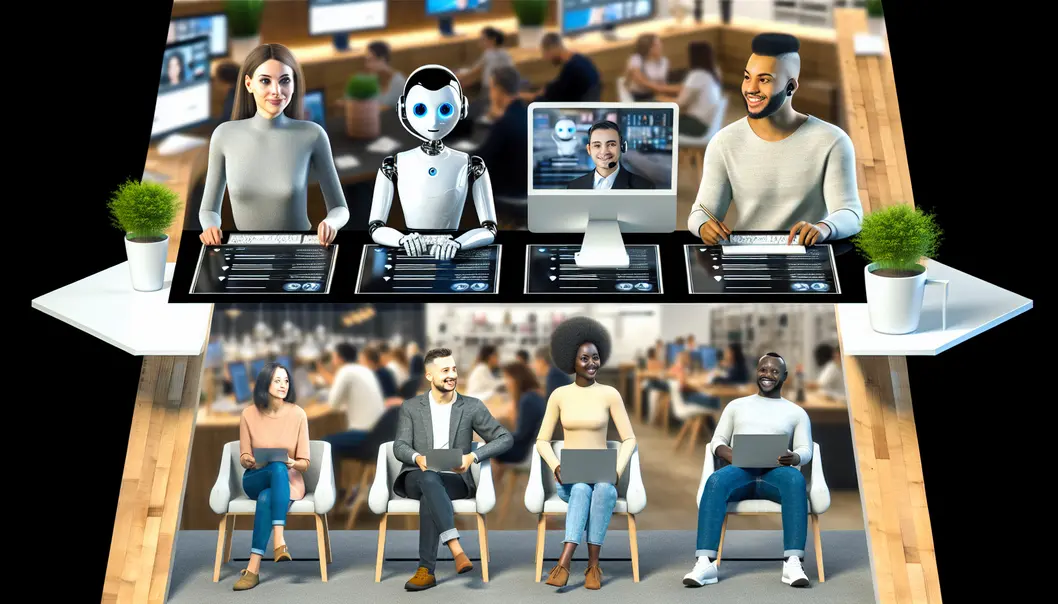
AI agents are reshaping customer engagement by delivering highly personalized experiences, streamlining interactions, and maximizing customer insights. Businesses utilize AI-powered tools to create tailored interactions that resonate with consumers. This transformation is fueled by advancements in natural language processing and machine learning.
Personalized experiences are at the heart of this change. AI analyzes user data to understand individual preferences, crafting unique interactions that fit customer needs. By processing past interactions and behavioral patterns, AI can predict future actions, offering products and services when they’re most likely to be desired. This dynamic personalization enhances customer loyalty and boosts satisfaction.
Chatbots have emerged as crucial tools for real-time communication. Equipped with sophisticated algorithms, these AI agents can handle a range of queries, learn from each interaction, and continuously improve. Businesses implement chatbots to ensure 24/7 availability, offering quick resolution to issues without human intervention. As a result, companies reduce overhead costs while maintaining high service levels.
Customer analytics driven by AI provide businesses with deep insights into consumer behavior. AI tools sift through massive datasets to identify trends and patterns that humans might overlook. These insights empower businesses to make informed decisions, adapting strategies to meet evolving customer demands. Enhanced analytics lead to effective marketing campaigns, optimized supply chains, and improved product development.
Several businesses have successfully integrated AI agents to reinvent customer engagement. For instance, a major retailer employed AI to create a seamless shopping experience both online and offline. Consumers receive personalized recommendations based on past purchases and browsing history, significantly enhancing their shopping experience. Another example is a leading financial institution using AI chatbots to handle customer inquiries, ensuring quick responses while freeing human agents to tackle more complex issues.
For companies aiming to maximize customer engagement through digital means, exploring how to use AI tools for efficient communication and insights is crucial. Thus, AI is not just a futuristic concept; it is a driver of present-day transformation in the business landscape, fundamentally altering how businesses connect with customers.
Final words
AI agents are pivotal in shaping the future of business. By automating tasks, enhancing decision-making, and transforming customer interaction, they offer a pathway to improved efficiency and innovation.